
My friend Pat is a big TV fan, and, over the years, he has maintained that, as television episodes go—particularly for those series with some kind of narrative arc—the second-to-last ones are usually better than the finales. For whatever reason, he has repeatedly said, they are the ones with the stronger writing, the more intense drama, the more meaningful action. If the finales resonate because they are the moments when all is resolved (or not resolved), when the writers put their exclamation points (or periods or ellipses) on their narratives, when the characters say their goodbyes to the audience, the penultimate episodes come with an excitement all their own, as the showrunners try to build suspense, generate interest, and amp up the hype.
Although the debate about the strength or intensity of the episodes themselves could boil down to a matter of taste, there is something particularly unique to what those second-to-last episodes do to us or for us, so I’d like to devote some time to them in this post. I’ve been thinking about them a little more since the spring—in part, because I’ve been thinking about TV finales and, in part, because of last spring’s Girls finale, where the penultimate episode appeared to serve multiple roles in the narrative. In a Hollywood Reporter interview from that weekend, series writer/producer Jenni Konner notes that the second-to-last episode, “Goodbye Tour,” was a finale of sorts, inasmuch as it brought the “girls” together one last time, to break up and dance at Shoshanna’s engagement party. It wasn’t the ending, though; the writers saved that for Hannah’s breastfeeding adventure in motherhood, “Latching.” Konner goes on to credit fellow writer/producer Judd Apatow for this dual-finale structure, of making “Goodbye Tour” “our ending” and leaving “Latching” as “the end we really want[ed] to do.” While the writers had their cake, the critics weren’t so convinced. Following Pat’s theory of penultimates, they lauded the “Tour” and were less excited about “Latching.” The Atlantic’s Sophie Gilbert, for example, was quick to dismiss Hannah’s send-off: “Much has been made of the fact that ‘Goodbye Tour’ functioned well as a series finale, with its nod to friendships past, and its final scenes of Hannah moving triumphantly into her Hudson Valley house. So the question is, why bother with an episode like ‘Latching’ at all?” For all that’s made of endings, maybe writers don’t always save their best for last.
The second-to-last episode of The Sopranos, “The Blue Comet,” certainly stands out as one of the best penultimate episodes in recent memory, and, while it may not have been as controversial, it offered up just as much tension as the finale, if not more so. Where David Chase spends a good portion of other seasons working up to the deaths of family members like Big Pussy, Ralphie, and Tony Blundetto and devotes entire episodes to their deaths, two family members are gunned down in the span of this hour, as Bobby Bacala is whacked in the hobby shop, and Silvio is critically wounded outside of the Bada Bing. As the episode draws to a close, Tony and his remaining crew nervously hunker down in a safe house, with Tony himself literally going to the mattresses and sleeping in an unmade bed clutching a machine gun. Under these circumstances, viewers may well have been expecting the finale to be something out of Public Enemy, The Godfather, or Scarface; although Phil’s death was in that vein, Tony’s negotiations with New York, his musings with an ailing Uncle Jun, and, of course, the infamous cut-to-black made for something different and flew in the face of such mob clichés.
The Prisoner also comes to mind here. In the sixteenth episode, “Once Upon a Time,” Patrick McGoohan’s Number Six is locked in the “Embryo Room” to do psychological, and, at times, physical, battle with Leo McKern’s Number Two, with the understanding that only one of them will survive. (Things got so intense during filming that McKern even had a nervous breakdown. Robert Sellers reports how McGoohan found him “curled up in the foetal position on [the] couch [in his dressing room]” (131), and production on the show stopped so that he could receive treatment.) After outlasting his opponent, Number Six asks to see the mastermind behind his incarceration in the Village, the mysterious Number One. Again, the episode’s closing moments might well have led viewers to expect something more cliché in the finale, some kind of small screen Ernst Stavro Blofeld, as opposed to the more chaotic “Fall Out,” with its absurdist commentaries on conformity, individuality, nuclear war, evolution, inhumanity, class struggle, the judicial system, and society as a whole. Just as Chase himself had to go the mattresses (or, in this case, France) in the wake of “Made in America”, McGoohan “had to go into hiding in the mountains for two weeks [after the episode aired]” (Sellers 137), to avoid viewer “fallout” from his ambitious, experimental hour.
https://youtube.com/watch?v=xAOd30fwalA
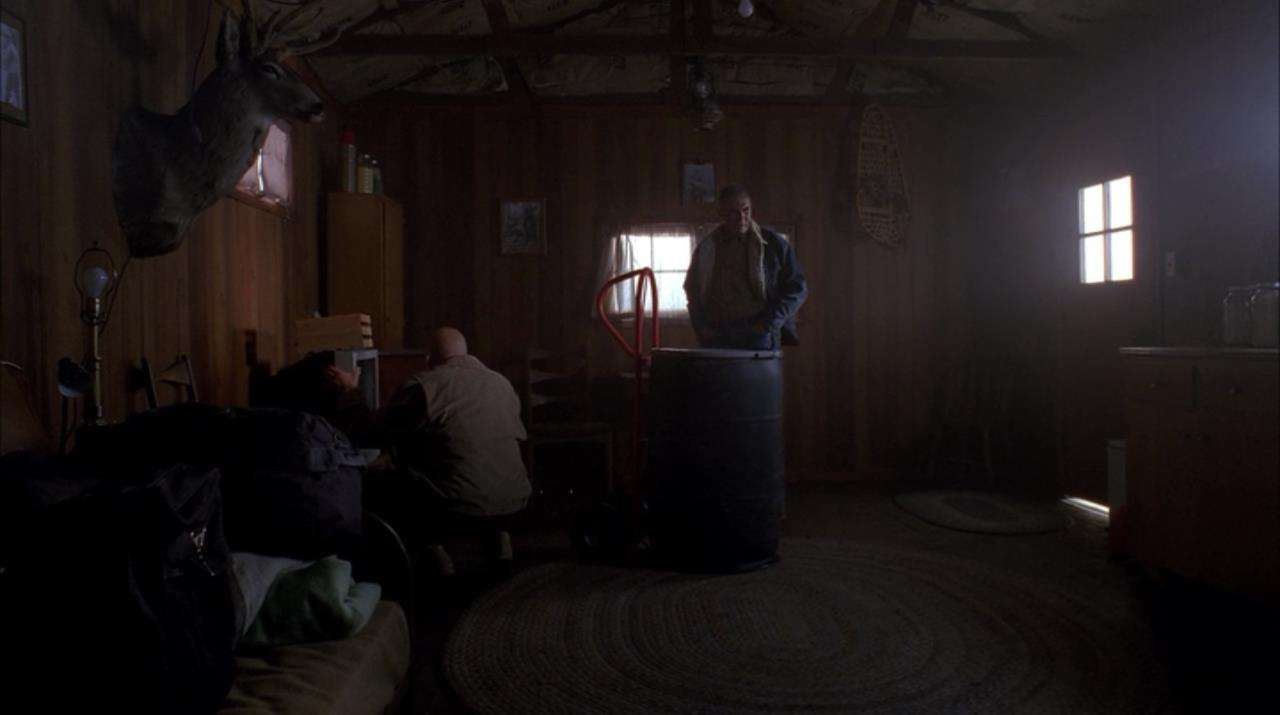
Even with shows with particularly effective finales, the showrunners have used the second-to-last episodes for some series-making moments. In the first part of The Fugitive finale and the second-to-last episode to air, “The Judgment, Part I,” Lieutenant Gerard loses his cool during his interrogation of the one-armed man and finally captures Richard Kimble outside of Jean Carlisle’s apartment. Betty finds out about her cancer, Pete Campbell and Trudy reconcile, and Don Draper comes clean to a group of veterans about his CO’s death in “The Milk and Honey Route.” Vic Mackey confesses to all of his crimes in exchange for immunity in “Possible Kill Screen.” And where the streetwise Vic is sentenced to a desk job in The Shield finale, we get a sense of what hiding out would look like for Walter White in “Granite State,” as he wastes away in that rundown cabin in the snowy woods of New Hampshire.
 While penultimates don’t conclude the storyline, they set the table for the last supper, leaving us to wonder about the meal to come and what it will taste like. Unlike the previous episodes in the series, we know, from what the networks, the media, and, perhaps, even the show’s creators themselves have told us, that the next one will be the ending, a fact that puts us as viewers in an unusual imaginative space. In that moment, the series is incomplete and fragmented, and, whether we actively choose to wait before we stream the finale episode or are forced by a network to endure those delicious days or weeks until it airs, we can’t help but wonder about the narrative possibilities in the ending to come. Will Don Draper return to his cushy office at McCann Erickson and go back to the boardroom with that assembly line of account executives, or will he parachute out of an airplane as D.B. Cooper? Will Dexter Morgan start a new life in Argentina with his girlfriend and his son, or will he get arrested and finally face execution for all of those garbage bags that he dropped in the ocean? Will those people finally get off the Island on Lost, or did they die in that plane crash after all? Any and all endings are on the table and have the potential for being definitive.
I am reminded of what Marjorie Levinson says about readings of the Romantic Fragment Poem and how “[t]ogether, fragment and viewer reproduce the artist’s original construction but in finer—more ‘abstract and ideal’ tone” (32). With the penultimate viewing, we, too, collaborate with the series and create in our minds the ideal ending, the one that best suits our sense of what it was and what it meant to us. From the complexity of the viewing experience and the fickle nature of our imaginations, we may well envision multiple endings, discarding and retaining portions of each in the development of the one or even retaining them all in both tension and harmony, like the multiple Neos on those television screens at the end of The Matrix Reloaded.
 When the series ends, though, those possibilities are reduced, if not effectively eliminated, as we must emotionally and psychologically make peace with the ending that we have been given, whether it jives with our sense of the ideal or not. Lost and Leftovers co-creator Damon Lindelof is probably not unusual, in this regard, in his assessment of a series ending and its personal impact: “I think about those characters, but with nostalgia. I think about them the same way we think about relatives and loved ones and friends who are now dead […]. They may have gone on to live after their finales, but not in my mind. Their lives ended the last time I saw them on my television set.” While we can still conjure up fantasies of where they go or what happens next—and some people apparently do, given what Rebecca Williams says about fans who write “post-series fanfiction” “to negotiate their feelings of loss and discontinuity” (184)—the reality of the ending limits what we can and will reasonably entertain. Sam doesn’t wind up with Diane after Cheers, and Dawson doesn’t wind up with Joey after Dawson’s Creek. Wilson doesn’t beat his cancer on his road trip with House. Sam Beckett won’t make it home. Barring some Gilmore Girls-type revival and/or some Dallas dream-sequence scenario, the ending that we get is the one that takes precedence in our minds as the ending; it’s the one that the showrunners created, the one that we consumed and experienced and remember, the one that we ultimately must accept. Once we’ve seen it, we can’t un-see it. The what-ifs and what-could-have-beens make for some interesting coffee-clutch conversations, but, at that point, that’s largely all that they can be. If the finale is a death of sorts—C. Lee Harrington, in fact, has already considered how discussions of television finales, like Lindelof’s, typically incorporate “a discourse of death and dying” (580)—then part of what dies for us in the aftermath is the imaginative possibility of the ideal.
Some viewers, however, elect to cheat that death or, at the very least, to provide a stay of execution for their imaginations, by deliberately avoiding the ending. For example, among the comments on an Orphan Black message board after the final episode, poster “Dead_Starks” wonders, “If I don’t watch the finale it never ends right?” In Starks’s estimation, the ending is not something that the networks schedule and that she must watch; it’s not something beyond her control. Rather, it’s a construct and a process that she can actively choose to engage or not engage.
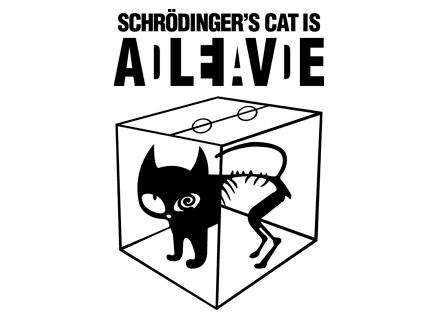
Along the same lines, not too long ago, Janet McCabe told me about viewers who recorded the finales, but never watched them, an intriguing audience approximation of Schrödinger’s Cat. The ending exists, but doesn’t exist; since the viewers never open or “turn on” the box, they never know what the ending actually is. For these viewers as well as for Starks and others like her, the series itself is eternally stuck in the limbo of the penultimate, a potentially frustrating realm to remain in and yet a comforting place, inasmuch as they never know the ending and the characters never have to “die” in their minds. Instead, the world of possibilities continues to turn, and the disappointment of an ending that fails to live up to the ideal is rendered inert, since they never see it. In order to stay in this place, however, these viewers (or non-viewers) must always be on the lookout for news stories, blog posts, or stray spoilers, because any revelation could kill the dream of not knowing.
 If Matt Zoller Seitz is right and “the importance of the ending has faded” in this age of streaming, multiplatform television — and the jury is still out on that for me — then writers and showrunners may be less concerned with working toward closure and more interested in creating exactly what penultimates give us, that desire for more and that imaginative curiosity about what happens next. For us as well as for them, penultimates may come first.
I had another paragraph to add here. But something tells me that I should just end with this one.
Douglas L. Howard is Chair of the English Department on the Ammerman Campus at Suffolk County Community College.
Works Cited
Harrington, C. Lee. “The ars moriendi of US Serial television: Towards a good textual death.” International Journal of Cultural Studies, vol. 16, no. 6, 2013, pp. 579-595.
Levinson, Marjorie. The Romantic Fragment Poem: A Critique of a Form. U of North Carolina P, 1986.
McCabe, Janet. “Re: Finale Book.” Received by Douglas L. Howard, 4 Sept. 2015.
Sellers, Robert. Cult TV: The Golden Age of ITC. Plexus, 2006.
Williams, Rebecca. Post-Object Fandom: Television, Identity and Self-Narrative. Bloomsbury, 2015.